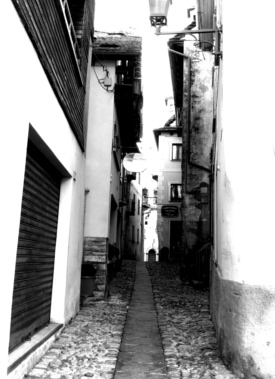
The "Cabiettes" of Rochemolles are a traditional recipe of Valle di Susa. Rochemolles is a fraction of Bardonecchia in the mountains near Turin.
One of the recipes from the Piedmont mountain flavor and hearty. The "cabiettes" are small nettle gnocchi served with cheese and onions, the characteristics of the tradition of this dish is that the potatoes are mixed raw, then cooked together with dumplings, a characteristic that unites the "Calhetas" of nearby Chisone .
INGREDIENTS FOR 4 \ 6 PEOPLE
- Potatoes 1 kg
- Rye flour 250g
- Nettles 200 g
- No onions 4
- Breadcrumbs 90 gr
- Butter 80g
- Toma Piemontese 80 gr
- No 2 eggs
- Salt
METHOD
Wash very well the nettles and chop very finely. Then peel the potatoes dry wash and grate into a bowl. Finely chop the Toma Piemontese and add it to the winds and chop the potatoes to add a whole egg and a yolk, rye flour and a pinch of salt.
Knead until mixture is bound and solid let it rest in the fridge for at least an hour. Return while the dough rests, prepare the sauce. Clean the onions and cut into Julien fry them in a pan with 40g of butter over low heat and add salt and cook for about 15 minutes.
Make dumplings with the mixture of nettles take big shots as a fair fist roll them to make sticks and chop obtaining of dumplings rather small. Distribute the dumplings on a wooden board covered in flour to keep them from sticking.
Lead to demolition a pot with salted water throw "cabiettes" not just come to the surface drain them with a slotted spoon and place in a buttered baking dish dressing dumplings with a piece of fried onions.
Continue alternating layers in this way "cabiettes" sauce of onions, then sprinkle with the breadcrumbs and the remaining butter flakes.
Bake for 30 minutes at 180 ° C and serve hot
To accompany the "cabiettes" I can recommend you a mountain wine as Ramìe of the nearby Val Chisone.
Showing posts with label RECIPE. Show all posts
Tuesday, September 10, 2019
Wednesday, August 12, 2015
THE PLIN (FILLED PASTA)
The PLIN are a typical product of Piedmont cuisine, particularly the Cuneo area and the western Piedmont.

In Piedmontese dialect the plin is the pinch, as this term is derived the name of this egg pasta filled with roasted meats, the plin is the pinch that is given to the pasta.
The Plin are cooked in boiling water and fried with butter and sage sauce or gravy.
But to fully appreciate the taste, tradition has it that you may taste on a napkin with no seasoning. During the event the Gustadom Asti you can taste the plin served in this way.
THE RECIPE OF PLIN
INGREDIENTS FOR 6 PEOPLE
For the pasta of the plin
500 g wheat flour
5 eggs
extra virgin olive oil
salt
For the filling of plin
300 grams veal roast
300g roast pork (thigh)
200 gr rabbit meat
300 grams of spinach
3 eggs
200 grams of Parmesan cheese
1 carrot
1 celery
1 onion
1 clove garlic
1 glass of dry white wine
broth
extra virgin olive oil
butter
rosemary
salt
pepper
PREPARATION
Sauté celery, carrots and onions, add the meat cut into small pieces, garlic, rosemary, salt and pepper.
Pour over the white wine and let evaporate. Cook the meat by covering with a lid adding broth if needed. Once cooked and cooled, chop finely, add the spinach and squeezed, Parmesan.
Mix well with eggs, salt and pepper and set aside.
Prepare the dough with flour and eggs, finely pull and prepare the strips. Place the stuffing balls the size of a hazelnut. Fold the dough to cover the filling, trim it with the wheel cutter and seal the spaces between the fillings of plin with the classic pinch. Separate finally agnolotti with Wheel.
Cook in boiling salted water for 3 to 4 minutes and serve with the sauce you want.
Tuesday, November 4, 2014
PEACH WITH AMARETTI AND COCOA
After the summer break, here I am with new recipes and curiosity of traditional Piedmontese cuisine.
The peaches with amaretti and cocoa are not to be confused with the "persi pien" in piedmontese dialect or the stuffed peaches. I am a very tasty summer dessert.
Their flavor takes me back to summers spent in the countryside with my grandparents. My grandmother was preparing peaches with amaretti and chocolate with peaches of the vineyard, smaller and less sweet than the others, but with this recipe peaches reborn with an extraordinary taste.
The peaches with amaretti and chocolate is also a way to use the overripe fruit that would otherwise be destined to rot.
INGREDIENTS FOR 4 PERSONS
PEACHES 1 KG
SUGAR 150 GR
AMARETTI 80 GR
COCOA POWDER 100 GR
PROCEDURE:
Clean and peel the peaches, cut into pieces and put them in a pot.
Bring to the boil and cook for 2 \ 3 minutes, in the meantime, break the macaroons, add the peaches along with the cocoa and cook for about 5 minutes.
Allow to cool.
If you do not have peaches or you don't want to prepare, you can find peaches with amaretti and cocoa on the site Dolcepiemonte following this link: - Pesche all'amaretto - and recive them directly to your home.
Monday, October 20, 2014
ANCHOVIES WITH PARSLEY
Anchovies are one of the ingredients of the typical Piedmontese cuisine, strange to say for a region far from the sea. But the reason is linked to the historic smuggling of salt that arrived in Piedmont ( the kingdom of Savoy) from France through the Alps. During those times the anchovies were cheaper and were then used to hide the salt crossing of borders.
From this tradition originate importants recipes of Piedmontese cuisine like the mythical bagna cauda or anchovies with parsil as one of the starters more typical of our tradition.
Anchovies with parsil is a simple recipe but with intense taste like bagna cauda.
INGREDIENTS FOR 8 PEOPLE
200 grams of salted anchovies
1 bunch of parsley
1 chilli pepper
1 clove of garlic
1 tablespoon of vinegar
1 cup of olive oil
Breadcrumbs
PROCEDURE
Switch the anchovies under running water opening them along the belly and carefully removing the bone.
Let them drain well.
Clean the garlic and chop finely with a knife. Finely chop the parsley and even combine everything with olive oil.
Put the bread crumbs in a bowl and pour over the vinegar, when it is well soaked add the parsley and garlic. The crumb is used to obtain a creamy mixture and tied. Add the crushed red pepper.
Arrange the anchovies in a container with high sides and cover each layer well with the green sauce.
To best enjoy this typical Piedmont cuisine appetizer recommend anchovies in green let stand for at least twenty-four hours in this way will absorb the flavor of the sauce.
Serve on a slice of toast.
You can accompany anchovies in green with a wine typical of the Piedmont mountains as the Ramìe.
Come to visit Piedmont and try all our taste and food.
Saturday, September 20, 2014
Chocolate cupcakes with Moscato sabayon
The chocolate cupcakes with Moscato sabayon are a great recipe for a dinner by candlelight.
An idea to combine our Moscato sabayon in a recipe of haute cuisine that will surprise your guests .

Ingredients for 2 people:
- Dark chocolate 80 g
- Brown sugar 60 grams
- 40 g caster sugar
- 40 g almond praline
- Chocolate biscuits 100g
- N 1 whole egg
- Moscato zabaione Dolcepiemonte one jar
- 50 g butter
PROCEDURE
Heat 40g of butter in focus with light brown sugar to dissolve .
Combine the coarsely grated chocolate and let melt , stirring regularly.
Remove the mixture from the heat, add the almonds , coarsely chopped praline previously , the cookie crumbs and the egg . Stir to mix thoroughly all ingredients.
Grease 2 baking individual molds , fill them with the chocolate mixture and press it down well and leveling . Put it in the refrigerator for at least 3 hours.
Heat the Moscato zabaione Dolcepiemonte in a bain marie and distribute it in large bowls or platters , settling over the chocolate cupcakes just out of the fridge . Dust with cocoa and serve.
Saturday, January 18, 2014
ROAST MEAT WITH LANGHE HAZELNUTS
The recipe of the roast veal with hazelnuts from the Langhe is a typical dish of the surroundings of Alba but it is prepared in the whole Piedmont . The combination of the taste of hazelnuts fits perfectly with the flavor of the meat.
INGREDIENTS
800 grams of veal
100 grams of Gentile delle Langhe hazelnuts IGP
50 grams of butter
pint of milk
half an onion
2 or 3 tablespoons Marsala
salt
80 gr Flour
water
PREPARATION
Clean and cut the onion into small cubes . In a large pot , brown the onion in the butter , then put the nut of veal and let it brown the meat well .
Wet conil Marsala wine until completely evaporated. Season with salt and add the milk and chopped hazelnuts from Piedmont previously .
Cook for at least 120 minutes.
Remove the nut of veal and set aside.
Bring the sauce to a boil , in part to prepare a roux with flour and water, mix well , adding water until you have a smooth batter , then pour in the sauce to boil and cook for a few minutes.
Cut the meat into slices and serve with roasted hazelnuts of the Langhe coated with the sauce and garnish with a few whole hazelnuts .
On this blog visitpiedmont.blogspot.com we try to spread the traditional recipes in the belief that this will spread the culinary culture that is true culture . Come back often and visit us to discover ever new recipes and historical trivia about the Piedmontese cuisine.
Wednesday, January 15, 2014
SAVOIARDI BISCUITS
The origins of the Savoiardi biscuits are lost in time , especially because they were prepared in many different places in Italy and abroad ( just think of the ladyfinger English ) .
So many names but only one cookie , easy to carry , soft used for many recipes . The Savoiardi biscuits , typical Piedmont cuisine, are used in the preparation of tiramisu ( dessert loved by the Count of Cavour) also soaked in milk alone.
The history of the Savoiardi biscuits is therefore very uncertain, according to legend, to welcome the King of France to visit, Amedeo VI of Savoy made by the court chefs prepare a special cookie to impress the Kings We are in the mid- 1300s and from that day the biscuits have spread throughout Italy and Europe thanks to the influence of the House of Savoy .
If the ladyfingers story is quite uncertain are very sure of their lightness and delicacy.
The biscuits are the typical recipe of Piedmontese cuisine that more than others has spread to Italy and the world.
INGREDIENTS FOR 4 PEOPLE
150 grams of caster sugar
100 grams of flour 00
4 eggs
50 grams of sugar
salt
PROCEDURE
Beat the egg yolks and whisk together with 80 g of granulated sugar until the mixture is soft and creamy.
Add a pinch of salt and the flour , stirring well to combine.
Beat egg whites until stiff with a pinch of salt and 20 g of powdered sugar, then gently add them to the mixture previously prepared with the egg yolks , stirring up not to dismantle them .
Grease and lightly flour a baking sheet.
Put the mixture of ladyfingers in a pastry bag with a plain nozzle and meter sticks on the baking sheet about 10 cm long , well spaced to prevent , swelling in the area, sticking to one another.
Mix the granulated sugar and powdered sugar and cover the remaining ladyfingers .
Let stand for 10 minutes, then repeat.
Bake at 180 ° C for 15-20 minutes, until the cookies have taken the classic golden color , remove from the oven , gently remove them from the pan and let cool on a rack .
Serve the Savoiardi biscuits with the traditional zabaglione cream , the classic combination of the salons of the aristocracy of Turin 800.
If you are looking for the biscuits ready , perhaps to prepare a tiramisu , can be found on the website www.dolcepiemonte.com by following this link: " SAVOIARDI " you can get them directly to your home .
Wednesday, January 8, 2014
Agnolotti with Jerusalem artichokes
The agnolotti pasta with Jerusalem artichokes are a typical recipe of Piedmontese cuisine which bring together two goodies agnolotti (or ravioli) and the Jerusalem artichoke, which is widely used in the recipes of Piedmont.
The Jerusalem artichoke is rich in vitamin A, which is essential to the eye and useful for cell differentiation. It also contains a high percentage of B vitamins, valuable in cases of general debility.
It also contains inulin which, combined with water, has the unique property of giving a feeling of satiety.
In Piedmont is almost a must to enjoy the tupinambur (or ciapinabò) in the wet and cauda is produced between September and November, especially in the municipalities of Carignan and Moncalieri (Turin).
DIFFICULTY ': MEDIA
INGREDIENTS FOR 4 PEOPLE
FOR THE DOUGH
- 300 grams of flour
- 100 grams of spinach
- 2 eggs
FOR THE FILLING:
- 800 g of artichoke
- 50 grams of grated parmesan
- 1 egg
- 1 sprig of thyme
- 10 g of butter
- salt
FOR THE SAUCE:
- 50 grams of grain
- 1 sprig of thyme
- 40 grams of butter
PREPARATION
Clean the artichokes and cut into cubes.
Melt the butter in a saucepan , add the Jerusalem artichokes and a sprig of thyme, sauté for 4-5 minutes.
Cook with the lid on for another 10 minutes , spraying with a little water, add salt.
Remove the thyme and pass the Jerusalem artichokes in a blender , add the egg, cheese and salt.
Clean the spinach and cook in a little lightly salted boiling water for 5 minutes. Squeeze them well and chop. Place the flour on a pastry board , place the eggs in the center, add the spinach and mix until the mixture is smooth and homogeneous.
Roll out the dough with a rolling pin on a floured table well into strips about 15 cm. Using a spoon, place dollops of the filling of the Jerusalem artichoke . Cover with another strip of dough and seal the sides of the filling with the pressure of the fingers. Cut rectangles of many 4 x 4 cm side with the toothed wheel .
Cook the ravioli with artichokes in boiling salted water . Drain and serve topped with butter and cheese flakes.
On this blog visitpiedmont.blogspot.it we try to spread the traditional recipes in the belief that this will spread the culinary culture that is true culture . Come back often and visit us to discover ever new recipes and historical trivia about the Italy Piedmontese cuisine.
Friday, January 3, 2014
RISOTTO WITH HAZELNUTS AND CASTELMAGNO
The Piedmontese cuisine is a mix of culture and tradition of agricultural products of high quality.
Hazelnuts are fruits of excellence in the hills of the Langhe in the province of Cuneo, rice is a product of the plains of Vercelli, Biella and Novara low. Castelmagno cheese is of great value that is obtained from the pastures of the Cuneo mountains.
So, the risotto with hazelnuts and Castelmagno is a great recipe that combines typical Piedmont cuisine and blends them together to give a true and authentic flavor.
Ingredients for 4 people:
400g rice suitable for risotto (carnaroli)
100 grams of hazelnuts from Piedmont
90 grams of cheese Castelmagno
50 grams of butter
Dry white wine 1 \ 2 cup
1 onion
1 liter of broth (vegetable or meat)
1 sprig of rosemary
salt
pepper
procedure:
We recommend buying the real Piedmont hazelnuts IGP to ensure greater quality and an incomparable flavor. Open hazelnuts and toast them in the oven for about ten minutes.
So break the hazelnuts coarsely and leave aside in a container.
Peel the onion, chop finely and fry for a few minutes with a little 'butter.
Add the rice and rosemary. Toast the rice for a minute then pour over the white wine.
When the wine has evaporated completely add a ladle of hot broth and stir gently with a wooden spoon.
Continue adding the broth as you need. Halfway through cooking the AC add half of Castelmagno previously diced and half of the hazelnuts.
When the rice is cooked fix it with salt and pepper, add the remaining Castelmagno and almost all nuts. Mix and stir in the butter.
Serve the risotto with hazelnuts and Castelmagno garnishing the dish with the remaining hazelnuts, rosemary and slivers of Castelmagno.
The typical piedmontese cuisine recipes on: http://visitpiedmont.blogspot.com,stay tuned!
Saturday, January 21, 2012
WALLISSHUPPA
The wallishuppa is a typical dish from Piedmont. Comes from the tradition of Walser, an ethnic minority that inhabits the north of Piedmont close to Switzerland, more preciselyaround the Monte Rosa.

DIFFICULT ': MEDIUM
INGREDIENTS FOR 4 PEOPLE
350 g onions
350 gr bacon
beef broth 1 l
toma 250 g
200 g of rye bread
100 g butter
cinnamon
PROCEDURE:
Wash and peel the onion, cut into slices with the bacon.
Place the rye bread slices on a baking sheet, lie above the Toma cut into cubes and toastin the oven.
Cook the onions with the butter and sugar in a saucepan, combine to complete browningthe bacon, fry leave.
Put one part of the compound on the bottom of the earthenware bowl, cover with a slice of bread and Toma, superimposing several layers continue to fill up the bowl
Finally pour over the broth and bake time to brown the top slightly, before serving sprinklethe surface with melted butter and cinnamon.
Serve Wallishuppa piping hot.
The typical piedmontese cuisine recipes on: http://visitpiedmont.blogspot.com
Thursday, December 15, 2011
GLORE GRATA
The glôre gratà is a typical dish from Piedmontese cuisine, in particular the Chisone valley in the province of Turin.
The glôre gratà has a variant grateful to talhioun in glôre, in the local dialect patois means cut, where the potatoes are grated rather than sliced. Soon I promise to post the recipe for this version of the glory.
The potatoes were once a staple food of the peasants of the mountains. Once the glôre of potatoes was a dish that was prepared in individual homes then baked as bread baked in the common villages or hamlets of the Val Chisone.
INGREDIENTS FOR 4 PEOPLE
- POTATOES 800 g
- Whole milk 500 ml
- Onion 1 \ 2
- BACON 10 g
- OIL
- N 1 whole egg
- SALT
- N 1 sprig of rosemary
PROCEDURE
Chop the onion and fry over low heat in a saucepan with a little 'of oil and a sprig of rosemary. Cut the bacon into small cubes and add to onion and continue to fry everything. When cooked, remove the rosemary sprig occurred.
Preheat oven to 220 ° C.
Peel the potatoes, wash them and pass them to the grater with large holes as shown in the picture. Grate the potatoes in a container capable. Add the egg and mix, saute the onion and bacon, milk, salt and mix well. Allow to stand for the glory about ten minutes because everything is tasteless, and mix well.
If you decide to put the glory in a large mold grease it with oil, otherwise I suggest you use the silicone molds, which need not be greased, making single-dose as I did. Pour the potatoes grateful to the glory of the molds, taking care to pour the liquid also.
Then bake for an hour in the oven to 220 ° C.
Serve hot as a side dish for roast or game in civet.
Find out other typical recipes of Italy Piedmontese cuisine on visitpiedmont.blogspot.com .
Thursday, November 24, 2011
CISRA'
The CISRA' is a typical dish of the Langhe, comes from the tradition of the poor Piedmontese cuisine. It seems that once the land of Dogliani, in the Langhe, during the feast of the holymembers of religious brotherhoods offered this hot and hearty soup made with tripe andchick peas to visitors coming from distant places through long marches.
The fair of the saints and the CISR still held every year in Dogliani November 2.
DIFFICULT ': MEDIUM
INGREDIENTS FOR 4 PEOPLE:
400 g of tripe (or 200 g of pork rind)
200 g of dried chickpeas
200 g of potatoes
400 g leeks
2 stalks of celery
half cabbage
1 white onion
salt
black pepper
rosemary
extra virgin olive oil
PROCEDURE
Put the chickpeas in a bowl of warm water at least the night before preparation to soften them well.
Sauté the onion in olive oil previously chopped, then add the leeks, potatoes, celery and cabbage, all chopped finely.
Sauté for 5 minutes, then add the tripe, cut into pieces and left to soak the chickpeas inwater overnight and then drained.
Cover everything with water, salt, pepper and a pinch of chopped rosemary and boil.
At this point, reduce heat and cook for 3 hours over moderate heat, stirring occasionally.
Pour into bowls and serve CISRA hot.Find out other typical recipes of Italy Piedmontese cuisine on visitpiedmont.blogspot.com .
Monday, November 21, 2011
RUNDITT
The runditt are a typical dish of piedmontese cuisine from Piedmont Vigezzo valley in the province of Verbano Cusio Ossola. They are also called "Stinchet" or "Amiasch" The name "Amiasc" isprobably derived from the Hebrew "unleavened", that means "no yeast, no fermented."
Runditt I are baked on the stone or plate of iron, red-hot coals on the fire and served withbutter. The origin of these thin wafers, typical Piedmontese cuisine, it seems Celtic.
In Vigezzo valley is grown still one of the few remaining quality of buckwheat, even in this valleycan still taste the Runditt as it once was.

DIFFICULTY ': EASY
INGREDIENTS FOR 4 PEOPLE
200 g white flour
75 g buckwheat flour
50 g butter
2 cloves of garlic
salt
PROCEDURE:
Sift the 2 types of flour and pour them on the table.
Combine the salt, then stir in cold water until a smooth paste.
Form a ball of dough, wrap in a cloth and faterla rest for at least 4 hours.
After this time, work the dough again and stendetrla runditt of a very thin sheet, obtainingmany disks approximately 10 cm in diameter.
On Fire Heat a cast iron plate or pan. When boiling water will settle down little by littledisks of dough and cook on both sides of the runditt.
When the pasta is cooked, remove the runditt with a thin spatula, grease them with a littlemelted butter, rub lightly with half a clove of garlic and serve immediately, piping hot.
Find out other typical recipes of Italy Piedmontese cuisine on visitpiedmont.blogspot.com .
Saturday, November 19, 2011
VIGEZZO VALLEY, VERBANIA
I arrive in Malesco in a mid-October day with four degrees of frost, and that turned intomist, slowly rising from the dawn-lit meadows.

I arrived after a road that climbs to Vigezzo, I spent a lot of curves and tunnels opens beforethe plains of Santa Maria Maggiore and Malesco. If you plan to visit Piedmont do not miss this border land between Italy and Switzerland.
The Vigezzo after Domodossola from Masera climbs towards the Swiss border and a narrow valley enclosed by vertical cliffs through waterfalls.
Already populated by the Celts then saw a long Roman domination.
This valley of painters because it has a long tradition of landscape painters and portraitistswho inhabited the Vigezzo for its beautiful landscapes of forests and meadows.
Council to also try the railroad "Centovalli" that rises from Domodossola to Locarno(Ticino) and that gives you the opportunity to discover the valley and its cliffs, waterfalls and villages.
For more information:
Railway Centovalli 0041-091-7560400/7518731 / 7510031. For group tours can be booked for the whole day or half day historical cars of the years 1906 and 1923.
A typical dish of the Piedmontese cuisine from Vigezzo Valley are called Runditt waffles made withbuckwheat which grows even in the Valley.
But the greatest curiosity of Vigezzo is definitely being the birthplace of the inventor of the water of Cologne.
He was born in Santa Maria Maggiore, in fact, the December 8, 1685 Giovanni Maria Farina, who emigrated to Germany in search of fortune found her thanks to the invention of the famous Eau de Cologne perfume baptized in honor of the city that welcomed him.
The Val Vigezzo is another opportunity to visit Piedmont and to see the wealth of landscape and culture of this extraordinary region.
I arrived after a road that climbs to Vigezzo, I spent a lot of curves and tunnels opens beforethe plains of Santa Maria Maggiore and Malesco. If you plan to visit Piedmont do not miss this border land between Italy and Switzerland.
The Vigezzo after Domodossola from Masera climbs towards the Swiss border and a narrow valley enclosed by vertical cliffs through waterfalls.
Already populated by the Celts then saw a long Roman domination.
This valley of painters because it has a long tradition of landscape painters and portraitistswho inhabited the Vigezzo for its beautiful landscapes of forests and meadows.
After Malesco do not miss the village of Kings known for an important shrine dedicated to Our Lady of the Milk erected as a result of the miracle occurred here in 1494. Since then,the effigy of the Virgin Mary is known as the King
Council to also try the railroad "Centovalli" that rises from Domodossola to Locarno(Ticino) and that gives you the opportunity to discover the valley and its cliffs, waterfalls and villages.
For more information:
Railway Centovalli 0041-091-7560400/7518731 / 7510031. For group tours can be booked for the whole day or half day historical cars of the years 1906 and 1923.
A typical dish of the Piedmontese cuisine from Vigezzo Valley are called Runditt waffles made withbuckwheat which grows even in the Valley.
But the greatest curiosity of Vigezzo is definitely being the birthplace of the inventor of the water of Cologne.
He was born in Santa Maria Maggiore, in fact, the December 8, 1685 Giovanni Maria Farina, who emigrated to Germany in search of fortune found her thanks to the invention of the famous Eau de Cologne perfume baptized in honor of the city that welcomed him.
The Val Vigezzo is another opportunity to visit Piedmont and to see the wealth of landscape and culture of this extraordinary region.
Subscribe to:
Posts (Atom)