The Mole Antonelliana is one of the landmarks of the city of Turin. Built by the architect Alessandro Antonelli is also the city's most loved monument by Turin people.
The Mole Antonelliana is located in the center of Turin, is 167.5 meters high. Characterized by a unique profile for a few years the Mole in Turin was the highest monument in Europe. The massive square base supports a lower dome uniquely shaped, characterized by elongated time with convex masonry walls standing. Above the dome is placed a spire. The forms are a mediation between neoclassical and neo-Gothic.
The history of the Mole Antonelliana from the first Constitution granted by Charles Albert, the "Statuto Albertino" that granted the freedom to worship is not Catholic. The Jewish community purchased the land to build a temple in 1863 began construction of the Mole. The initial idea was for a building with a height of 47 meters but Antonelli presented a project for a structure of 113 meters. Doubts about the feasibility of the project, the higher costs and construction times did abandon the project to the Jewish community.
Construction of the Mole Antonelliana (source Wikipedia)
The structure of the Mole Antonelliana was gradually increased over the years until it reached its present height of 167.5 meters in 1904, despite the death in 1888 of its designer.
Antonelli wanted to participate in the building even during his last days, an elevator operated by a pulley hoisted the nearly ninety architect at the top of the dome to allow him to personally check the status of jobs. But the first real lift opened to the public was built in 1964 although the current panoramic lift, made in glass that "flies" through the dome is active only since 2000. The panoramic lift salt for 85 meters at a speed of 5 km / h and above, up to the "temple" on top of the dome where you can enjoy a breathtaking view of the city of Turin and its surroundings.
Since 1996 the Mole Antonelliana is the seat of the National Museum of Cinema in Turin. An engaging museum that traces the history of film art from its origins with magic lanterns to the special effects of ET or Star Wars. Going through the techniques and figures entering the film making up the posters of the most famous films.
The National Museum of Cinema in Turin is the brainchild of the historic and scholar of cinema Maria Adriana Prolo in 1941 but only in 2000 the seat was moved steadily in the beautiful scenery of the Mole Antonelliana.
To really discover Piedmont one must visit this symbol of Turin, the Mole Antonelliana and be enchanted by the magic of cinema that fill with magic. The Mole is the center of Turin, which wander the streets of the city and then find other monuments like Palazzo Carignano, Via Po, Piazza Castello, etc ...
Walking can also discover the gastronomic specialties of Turin as the chocolates "gianduiotti", vitello tonnato, chocolate cake Gianduiotta, marsala wine Sabayon, etc ... Have a great journey in Turin.
Showing posts with label Itineraries and activities. Show all posts
Friday, August 14, 2015
Tuesday, March 18, 2014
A PORTRAIT OF PIEDMONT
We post a beautiful article about Piedmont appeared on the on-line version of newspaper Washington Post written By David Stewart White, Published: March 14
Fossano, Italy, is the perfect hub for exploring the lush Piedmont region
“Why is there a mime directing traffic?” asked my wife, looking up from the map on her iPad.
Traffic had snaked to a standstill in the warren of minuscule streets that make up Fossano’s medieval town center. The mime blew his imaginary whistle and stepped in front of our Fiat. Suddenly, we were part of the show.
Our arrival in Fossano coincided with Mirabilia, an international circus and performing arts festival. There’s hardly a street wider than an alleyway in the old center of Fossano. Add crowds, clowns and street performers, and you have a recipe for festive chaos. Navigating to our midtown hotel was like driving through a streetside Cirque du Soleil performance.
Chaos is not the norm in Fossano. Ancient and atmospheric, this town in the heart of Italy’s Piedmont region spends most of the year in slumber. “It deserves to be better known,” said hometown entrepreneur Enrico Castellano. That’s true, but Fossano’s relative anonymity might be the biggest draw for connoisseur travelers exploring this region of slow food and stellar wines.
Piedmont is a far cry from the tourist stops of Rome, Venice or Tuscany. Despite its location just
a few miles from the Langhe wine region, the city of Fossano remains unknown to many travelers to Piedmont. But it rewards by being one of the least touristy larger towns in the area. We used it as an authentic, comfortable and quiet base. (Quiet except for the lively street festival.)
Our home was Castellano’s Palazzo Righini. Castellano is a former management consultant who traded in his suit-and-tie life in the big city and returned to Fossano looking for a retirement “hobby.” Which turned out to be converting an ancient monastery into Fossano’s top restaurant and sole luxury boutique hotel. Castellano threw out an old joke that works well in either English or Italian: “How do you become a millionaire in the hotel business? Start out as a billionaire.”
Palazzo Righini’s renaissance as a modern luxury hotel is an unlikely story. The monastery and adjoining church catered to 16th-century pilgrims traveling from France to Rome. It was later converted into a noble’s mansion, and then occupied by French troops during Napoleon’s Italian invasion. Church and mansion were in sorry shape when Castellano purchased the property in 2000. Transform the site into a high-end hotel? “Madness!” said his wife. Madness perhaps, but the result is a thoughtfully designed, beautiful hotel run by a pleasant and capable staff.
Fossano is the perfect hub for a visit to Piedmont. Fifteen miles north, and you’re in Bra, the home of the slow food movement. Head east to wine heaven: Barolo, Barbera and Barbaresco. An hour south and you’re at the Alpine border with France. And just to the west is a most remarkable example of Gothic artwork, on the road to a city of music.
So cheesy
Piedmont — Piemonte in Italian — translates literally as “foot of the mountains,” and on a clear day, a nearly 360-degree view of the Alps is always lurking. Driving rural roads, you make a simple change in direction or the clouds part, and suddenly the mountains appear.
On our first post-mime day in Fossano, we drove south, eventually ascending several thousand feet of winding Alpine roadway to the minute mountain village of Valcasotto, just 10 miles from the French border. This cheese hamlet is owned and operated by Beppino Occelli, one of Europe’s premier cheesemakers.
As we arrived in a drizzling mountain mist, the hillside village seemed nearly deserted. A middle-aged couple working in the village shop knew as little English as we did Italian, but they were expecting us — the Americans here for the cheese tour. A telephone call was made, and in walked Umberto Milano, a bilingual 20-something marketing representative who took us on a cheese-tasting odyssey through the Beppino Occelli product line. “We have the best butter in Europe!” Umberto proclaimed. And he could be right, but our senses were on dairy overload after tasting a half-dozen deliciously rich cheeses served with sides of history and cheesemaking science.
Just when we were ready to swear off cheese forever, it was time to try some pasta — served, of course, in a creamy cheese sauce. Finally, with our arteries reeling, Umberto walked us through the village’s cheese production rooms and dark, cavernous cheese nurseries. Each wheel of cheese is carefully tended by a small staff of affineurs (cheesologists) who assess, turn and test the product until it’s perfectly aged.
The ideal post-cheese activity might be mountain hiking or biking, both of which are popular in the Valle Pesio region surrounding Valcasotto. We marveled at the mountain bikers struggling up the steep slopes as we pointed our Fiat downhill for the hour-long drive back to Fossano.
Vino, vino
Our antidote to cheese? Wine! On our next day trip, we drove 40 minutes east to reach some of the world’s best wine-producing areas. We parked our car in Alba and turned ourselves over to Silvia Aprato, manager of Tasting Tours and our guide for a day-long wine tour in the Langhe.
The Langhe is a hill-strewn terrain straddling Cuneo and Asti provinces. Those fertile hills are alive with some of the most valuable vines in Italy, producing arguably the country’s premier wines. We came expecting to sample quality wine, which we found in select abundance. Our bonus was meeting and interviewing a new generation of winemakers, the children and grandchildren of grape growers who have taken the reins at multi-generational wineries.
“Our grandparents grew grapes, but they did not make wine. Now we do both,” explained Luisa Rocca as she poured us tastes of deep red Barbaresco Rabajà from her family’s estate. Her brother, Francesco, hesitantly practiced his English with us, preparing for a marketing trip to the United States. We glimpsed the promising future of winemaking in the region through the eyes of these millennial winemakers.
Our private wine-tasting tour was a sublimely relaxed experience. We conversed with wine producers who opened and let us savor select wines while they shared regional history and occasional local gossip. In Piedmont, many winery visits are by appointment — fine vineyards have locked gates and intercoms. No crowded winery parking lots here filled with buses and limousines emptying partygoers competing to see just how much “free” wine can be consumed via one-ounce pours. And exit through the gift shop.
Private wine tours are not the only way to experience the region. There are also enotecas and winery cooperatives in nearly every Langhe hill town where anyone can sample local wines. Midweek crowds were sparse in June, but at times, free-roaming oenophiles and tourists overrun some of Piedmont’s picturesque hill towns. The hill town of Barolo is so popular that visitors even line up to shoehorn into a minuscule corkscrew museum that also doubles as a wine store and gift shop.
Bra, just 15 miles northeast of Fossano, is the acknowledged birthplace of the slow food movement. But slow food permeates much of Piedmont, and it isn’t hard to find a stellar meal almost anywhere in the region. This is a land of fresh ingredients and gently prepared food. In even the most modest bar or restaurant, order a late afternoon aperitivo and you get a bonus — a plate of olives, fresh or marinated baby vegetables, perhaps a bit of meat or fish pâté.
We found a piece of gastronomic heaven on the windswept terrace of Trattoria Cascina Schiavenza in the village of Serralunga d’Alba. Tajarin pasta with butter and sage? Yes! A bottle of the local red Dolcetto d’Alba? Of course. Add a 50-mile view of rolling vineyards and red-brick-fortified hill towns? Perfect. Throw in great breadsticks, olives and a bit of arugula salad? It can’t get much better. Top off the meal with panna cotta? Mmmmm. An espresso? Absolutely!
On the town
After three days of driving to experience Piedmont’s cheese, wine and slow food, we decided to leave the rental Fiat in the hotel garage and spend a day exploring our home base.
About 25,000 Piedmontese call Fossano home. Many live in the new (lower) town, but most visitors head for the old (upper) town. Parts of medieval-era Fossano are a maze of narrow one-way streets. Stone arcades line the Via Roma, old Fossano’s main thoroughfare. The ancient archways contrast with the modern designer goods displayed in the shop windows below. It’s hardly a surprise to find trendy boutiques in Fossano. Milan, Italy’s fashion capital, is only 120 miles away.
“Sometimes Fossano doesn’t get tourism,” lamented Enrico Castellano. And it’s true; the city’s prime historic site, the Castle of Acaja, is open only Sunday afternoons. There’s not much to entice tourists inside even if it were more accessible. But the castle’s distinctive silhouette high atop the city walls serves as a dramatic backdrop for another of Fossano’s festivals, the annual Palio dei Borghi. The traditional horse race through the old streets and around the castle might seem ancient but dates back to only 1961. (By contrast, Siena’s more famous Palio traces its “modern” history to 1656.)
The Palio coincides with a goose-jousting tournament, which can be traced to medieval times. In goose jousting, unfortunate caged birds had their heads chopped off by galloping swordsmen (the modern version employs artificial geese). Parades, flag throwing, tug-of-war and no small amount of drinking make this summertime event one of the liveliest in Fossano.
Fossano’s youth complain that the city is often “dead.” And at times the dead do reign in Fossano. The annual Feast of Saint Juvenal is held each spring, with a parade through the historic old town. Details are sketchy on Fossano’s patron saint: He may have been born in Africa, he may have been a martyr, his relics may lie in Fossano (or the bones may belong to another similarly named saint).
Music and moonlight
Before leaving, we had time for one last field trip, lured by a hidden gem just a few miles northwest. Inside Castello della Manta lies one of the most remarkable medieval art masterpieces in northern Italy.
Touring Castello della Manta is like opening a plainly wrapped box and finding a fine jewel inside. In the heart of this onetime castle, visitors discover rare secular Gothic frescoes adorning the baronial hall. An anonymous 15th-century artist covered the walls of the hall with nearly life-size, full-figure portraits of the Nine Worthies — historic heroes such as King David, Alexander the Great and King Arthur. Every male depicted has a “worthy” female counterpart immortalized in these breathtaking frescoes. On the opposite wall, dozens of characters visit the fountain of youth in a highly detailed fresco portraying this age-old dream. The castle church is also decorated with remarkable religious frescoes from the same time period.
Castello della Manta is just three miles south of Saluzzo, another historic Piedmont hill town and once a separate principality. We arrived late on the afternoon of June 21. In Saluzzo, summer solstice means Festa della Musica, with marching bands, choirs, guitar orchestras, rock bands and stray solo street musicians on every corner. We listened, strolled and listened again, until darkness finally fell on the longest day of the year.
Back in our Fossano base, the moon broke through the clouds to bathe the tiled rooftops of the town in a milky glow. Our view from the top floor of the Palazzo Righini hotel was one to wrap up and take home, if only moonlight views could be purchased as souvenirs or transported like carefully packed bottles of Italian wine.
White is the author of the travel guidebooks “Let’s Take the Kids to London,” “Travels Beyond Downton Abbey” and “Portugal—A Tale of Small Cities.”
The article talks about place, cheese and traditional food from the town of Fossano.
![]() |
| Fossano medioeval tower |
Fossano, Italy, is the perfect hub for exploring the lush Piedmont region
“Why is there a mime directing traffic?” asked my wife, looking up from the map on her iPad.
Traffic had snaked to a standstill in the warren of minuscule streets that make up Fossano’s medieval town center. The mime blew his imaginary whistle and stepped in front of our Fiat. Suddenly, we were part of the show.
Our arrival in Fossano coincided with Mirabilia, an international circus and performing arts festival. There’s hardly a street wider than an alleyway in the old center of Fossano. Add crowds, clowns and street performers, and you have a recipe for festive chaos. Navigating to our midtown hotel was like driving through a streetside Cirque du Soleil performance.
Chaos is not the norm in Fossano. Ancient and atmospheric, this town in the heart of Italy’s Piedmont region spends most of the year in slumber. “It deserves to be better known,” said hometown entrepreneur Enrico Castellano. That’s true, but Fossano’s relative anonymity might be the biggest draw for connoisseur travelers exploring this region of slow food and stellar wines.
Piedmont is a far cry from the tourist stops of Rome, Venice or Tuscany. Despite its location just
Our home was Castellano’s Palazzo Righini. Castellano is a former management consultant who traded in his suit-and-tie life in the big city and returned to Fossano looking for a retirement “hobby.” Which turned out to be converting an ancient monastery into Fossano’s top restaurant and sole luxury boutique hotel. Castellano threw out an old joke that works well in either English or Italian: “How do you become a millionaire in the hotel business? Start out as a billionaire.”
Palazzo Righini’s renaissance as a modern luxury hotel is an unlikely story. The monastery and adjoining church catered to 16th-century pilgrims traveling from France to Rome. It was later converted into a noble’s mansion, and then occupied by French troops during Napoleon’s Italian invasion. Church and mansion were in sorry shape when Castellano purchased the property in 2000. Transform the site into a high-end hotel? “Madness!” said his wife. Madness perhaps, but the result is a thoughtfully designed, beautiful hotel run by a pleasant and capable staff.
Fossano is the perfect hub for a visit to Piedmont. Fifteen miles north, and you’re in Bra, the home of the slow food movement. Head east to wine heaven: Barolo, Barbera and Barbaresco. An hour south and you’re at the Alpine border with France. And just to the west is a most remarkable example of Gothic artwork, on the road to a city of music.
So cheesy
Piedmont — Piemonte in Italian — translates literally as “foot of the mountains,” and on a clear day, a nearly 360-degree view of the Alps is always lurking. Driving rural roads, you make a simple change in direction or the clouds part, and suddenly the mountains appear.
On our first post-mime day in Fossano, we drove south, eventually ascending several thousand feet of winding Alpine roadway to the minute mountain village of Valcasotto, just 10 miles from the French border. This cheese hamlet is owned and operated by Beppino Occelli, one of Europe’s premier cheesemakers.
As we arrived in a drizzling mountain mist, the hillside village seemed nearly deserted. A middle-aged couple working in the village shop knew as little English as we did Italian, but they were expecting us — the Americans here for the cheese tour. A telephone call was made, and in walked Umberto Milano, a bilingual 20-something marketing representative who took us on a cheese-tasting odyssey through the Beppino Occelli product line. “We have the best butter in Europe!” Umberto proclaimed. And he could be right, but our senses were on dairy overload after tasting a half-dozen deliciously rich cheeses served with sides of history and cheesemaking science.
Just when we were ready to swear off cheese forever, it was time to try some pasta — served, of course, in a creamy cheese sauce. Finally, with our arteries reeling, Umberto walked us through the village’s cheese production rooms and dark, cavernous cheese nurseries. Each wheel of cheese is carefully tended by a small staff of affineurs (cheesologists) who assess, turn and test the product until it’s perfectly aged.
The ideal post-cheese activity might be mountain hiking or biking, both of which are popular in the Valle Pesio region surrounding Valcasotto. We marveled at the mountain bikers struggling up the steep slopes as we pointed our Fiat downhill for the hour-long drive back to Fossano.
Vino, vino
Our antidote to cheese? Wine! On our next day trip, we drove 40 minutes east to reach some of the world’s best wine-producing areas. We parked our car in Alba and turned ourselves over to Silvia Aprato, manager of Tasting Tours and our guide for a day-long wine tour in the Langhe.
The Langhe is a hill-strewn terrain straddling Cuneo and Asti provinces. Those fertile hills are alive with some of the most valuable vines in Italy, producing arguably the country’s premier wines. We came expecting to sample quality wine, which we found in select abundance. Our bonus was meeting and interviewing a new generation of winemakers, the children and grandchildren of grape growers who have taken the reins at multi-generational wineries.
“Our grandparents grew grapes, but they did not make wine. Now we do both,” explained Luisa Rocca as she poured us tastes of deep red Barbaresco Rabajà from her family’s estate. Her brother, Francesco, hesitantly practiced his English with us, preparing for a marketing trip to the United States. We glimpsed the promising future of winemaking in the region through the eyes of these millennial winemakers.
Our private wine-tasting tour was a sublimely relaxed experience. We conversed with wine producers who opened and let us savor select wines while they shared regional history and occasional local gossip. In Piedmont, many winery visits are by appointment — fine vineyards have locked gates and intercoms. No crowded winery parking lots here filled with buses and limousines emptying partygoers competing to see just how much “free” wine can be consumed via one-ounce pours. And exit through the gift shop.
Private wine tours are not the only way to experience the region. There are also enotecas and winery cooperatives in nearly every Langhe hill town where anyone can sample local wines. Midweek crowds were sparse in June, but at times, free-roaming oenophiles and tourists overrun some of Piedmont’s picturesque hill towns. The hill town of Barolo is so popular that visitors even line up to shoehorn into a minuscule corkscrew museum that also doubles as a wine store and gift shop.
Bra, just 15 miles northeast of Fossano, is the acknowledged birthplace of the slow food movement. But slow food permeates much of Piedmont, and it isn’t hard to find a stellar meal almost anywhere in the region. This is a land of fresh ingredients and gently prepared food. In even the most modest bar or restaurant, order a late afternoon aperitivo and you get a bonus — a plate of olives, fresh or marinated baby vegetables, perhaps a bit of meat or fish pâté.
We found a piece of gastronomic heaven on the windswept terrace of Trattoria Cascina Schiavenza in the village of Serralunga d’Alba. Tajarin pasta with butter and sage? Yes! A bottle of the local red Dolcetto d’Alba? Of course. Add a 50-mile view of rolling vineyards and red-brick-fortified hill towns? Perfect. Throw in great breadsticks, olives and a bit of arugula salad? It can’t get much better. Top off the meal with panna cotta? Mmmmm. An espresso? Absolutely!
On the town
After three days of driving to experience Piedmont’s cheese, wine and slow food, we decided to leave the rental Fiat in the hotel garage and spend a day exploring our home base.
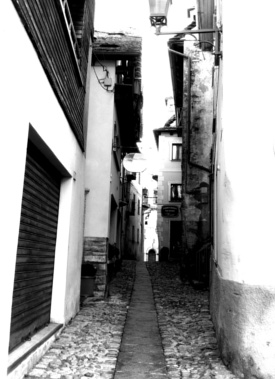
About 25,000 Piedmontese call Fossano home. Many live in the new (lower) town, but most visitors head for the old (upper) town. Parts of medieval-era Fossano are a maze of narrow one-way streets. Stone arcades line the Via Roma, old Fossano’s main thoroughfare. The ancient archways contrast with the modern designer goods displayed in the shop windows below. It’s hardly a surprise to find trendy boutiques in Fossano. Milan, Italy’s fashion capital, is only 120 miles away.
“Sometimes Fossano doesn’t get tourism,” lamented Enrico Castellano. And it’s true; the city’s prime historic site, the Castle of Acaja, is open only Sunday afternoons. There’s not much to entice tourists inside even if it were more accessible. But the castle’s distinctive silhouette high atop the city walls serves as a dramatic backdrop for another of Fossano’s festivals, the annual Palio dei Borghi. The traditional horse race through the old streets and around the castle might seem ancient but dates back to only 1961. (By contrast, Siena’s more famous Palio traces its “modern” history to 1656.)
The Palio coincides with a goose-jousting tournament, which can be traced to medieval times. In goose jousting, unfortunate caged birds had their heads chopped off by galloping swordsmen (the modern version employs artificial geese). Parades, flag throwing, tug-of-war and no small amount of drinking make this summertime event one of the liveliest in Fossano.
Fossano’s youth complain that the city is often “dead.” And at times the dead do reign in Fossano. The annual Feast of Saint Juvenal is held each spring, with a parade through the historic old town. Details are sketchy on Fossano’s patron saint: He may have been born in Africa, he may have been a martyr, his relics may lie in Fossano (or the bones may belong to another similarly named saint).
Music and moonlight
Before leaving, we had time for one last field trip, lured by a hidden gem just a few miles northwest. Inside Castello della Manta lies one of the most remarkable medieval art masterpieces in northern Italy.
Touring Castello della Manta is like opening a plainly wrapped box and finding a fine jewel inside. In the heart of this onetime castle, visitors discover rare secular Gothic frescoes adorning the baronial hall. An anonymous 15th-century artist covered the walls of the hall with nearly life-size, full-figure portraits of the Nine Worthies — historic heroes such as King David, Alexander the Great and King Arthur. Every male depicted has a “worthy” female counterpart immortalized in these breathtaking frescoes. On the opposite wall, dozens of characters visit the fountain of youth in a highly detailed fresco portraying this age-old dream. The castle church is also decorated with remarkable religious frescoes from the same time period.
Castello della Manta is just three miles south of Saluzzo, another historic Piedmont hill town and once a separate principality. We arrived late on the afternoon of June 21. In Saluzzo, summer solstice means Festa della Musica, with marching bands, choirs, guitar orchestras, rock bands and stray solo street musicians on every corner. We listened, strolled and listened again, until darkness finally fell on the longest day of the year.
Back in our Fossano base, the moon broke through the clouds to bathe the tiled rooftops of the town in a milky glow. Our view from the top floor of the Palazzo Righini hotel was one to wrap up and take home, if only moonlight views could be purchased as souvenirs or transported like carefully packed bottles of Italian wine.
White is the author of the travel guidebooks “Let’s Take the Kids to London,” “Travels Beyond Downton Abbey” and “Portugal—A Tale of Small Cities.”
You can read the full article at this link: http://www.washingtonpost.com/lifestyle/travel/fossano-italy-is-the-perfect-hub-for-exploring-the-lush-piedmont-region/2014/03/13/0d156b96-a0bf-11e3-b8d8-94577ff66b28_story.html
You can find the original taste food from Piendmont on www.dolcepiemonte.com and get the typical Piedmontese products throughout Europe.
Monday, November 5, 2012
WIDEMANN COTTON MILL, TURIN
When it was created the first cotton mill in Chisone San Germano, Italy had been united only by a year.
It was in 1862 that Paul Mazzonis fact, tailor Turin, and his brother founded the "Brothers Mazzonis and comp."
The fledgling company was the first spinning Chisone although in later years were created other companies related to the processing of cotton and silk.
The strategic position of the cotton mill was Mazzonis, the Napoleonic road that leads to Sestriere and then to France was a great outlet shopping. The presence of the river Chisone was used to create the necessary energy to the needs of the entire company and also a part of public lighting. (In the picture of a particular power plant within the factory)
Although at that time there were no problems of air pollutant emissions, the Kyoto protocol or Copenhagen conference on climate change, the cotton mill was powered solely by the river Chisone (until 1967).
Widemann The family of Alsatian origin, purchased the cotton mill in 1892 after a fire. Under the management Widemann the cotton mill had experienced a great development that reflected the entire town of San Germano Chisone.
In 1957 the cotton mill grew to 600 employees, then began a decline that led to the failure of the company in 1978.
In the photo Widemann cotton mill as it appears today.
Today, the cotton mill still dominates the entrance of San Germano Chisone sides are a little aged, but inside there are still some small businesses in various industries.
Unfortunately, the system of canals and hydroelectric power to create electricity are out.
As for the gastronomy San Germano Chisone is greatly influenced by the presence of the Vaudois, and is typical of the "Waldensian soup" made with bread sticks and soup. A local product is definitely the "Seiras the Fen" which is made from cow's milk of San Germano Chisone. Still, one can quote "gofri" waffles stuffed with cheese, ham, or jam.
Sites of special interest to San Germano Chisone:
- Villa Widemann (now the town and the museum Skirochon)
- Museum Skirochon
- Park Widemann
For more information: http://www.comune.sangermanochisone.to.it/
It was in 1862 that Paul Mazzonis fact, tailor Turin, and his brother founded the "Brothers Mazzonis and comp."
The fledgling company was the first spinning Chisone although in later years were created other companies related to the processing of cotton and silk.
The strategic position of the cotton mill was Mazzonis, the Napoleonic road that leads to Sestriere and then to France was a great outlet shopping. The presence of the river Chisone was used to create the necessary energy to the needs of the entire company and also a part of public lighting. (In the picture of a particular power plant within the factory)

Although at that time there were no problems of air pollutant emissions, the Kyoto protocol or Copenhagen conference on climate change, the cotton mill was powered solely by the river Chisone (until 1967).
Widemann The family of Alsatian origin, purchased the cotton mill in 1892 after a fire. Under the management Widemann the cotton mill had experienced a great development that reflected the entire town of San Germano Chisone.
In 1957 the cotton mill grew to 600 employees, then began a decline that led to the failure of the company in 1978.
In the photo Widemann cotton mill as it appears today.
Today, the cotton mill still dominates the entrance of San Germano Chisone sides are a little aged, but inside there are still some small businesses in various industries.
Unfortunately, the system of canals and hydroelectric power to create electricity are out.
As for the gastronomy San Germano Chisone is greatly influenced by the presence of the Vaudois, and is typical of the "Waldensian soup" made with bread sticks and soup. A local product is definitely the "Seiras the Fen" which is made from cow's milk of San Germano Chisone. Still, one can quote "gofri" waffles stuffed with cheese, ham, or jam.
Sites of special interest to San Germano Chisone:
- Villa Widemann (now the town and the museum Skirochon)
- Museum Skirochon
- Park Widemann
For more information: http://www.comune.sangermanochisone.to.it/
Thursday, January 12, 2012
CHISONE VALLEY, TURIN
The name derives from the Latin Chisone "clausum" which means closed. And indeed, the valley that rises up from Pinerolo to Sestriere from the idea of a valley enclosed by the Hautes Alpes that surround it.

Pinerolo is the most important town of Chisone, famous for being a fief of the Princes of Achaia and in the past the school of chivalry.
Going up the valley through the regional road 23 that runs along the river Chisone then find the town of San Germano Chisone home, past the cotton mill Widemann.
Continuing the road to meet Villar Perosa Sestriere, where the country was born of Senator Giovanni Agnelli founded Fiat and several times mayor of Villar Perosa (as well as his grandson Gianni Agnelli. Villar Perosa you can see that Edmondo De Amicis in his book "Journey to Italy" described as a "little white copy of Superga." in fact the church, built between 1711 and 1716 by Victor Amadeus II of Savoy seems to be the work of Juvarra (the same architect of Superga) also if there are no official documents.
Further, we also find the country of Argentina Perosa also a time when textile mills (cotton and silk) of which now remains only the cotton mill which employs few people and an eco-museum that has collected the materials, documents and testimony relating to the activity textile industry in the valley.
Chisone in history has passed several times under French rule and Perosa is also the ancient border with French dauphin of which now remains only a ruin of a rock called Bec Dauphine.
From Perosa Argentina is a bifurcation from which the Germanasca Valley. The Chisone as Germanasca Valley has seen over the years the establishment of the Protestant Waldenses.
During the resistance in the valley formed several independent partisan groups subjected to the direct control of the CLN
These partisans, led by Sergeant of the mountain and ski Maggiorino Marcellin, do not engage in any political party and also came up for a few months a partisan autonomous republic.
The fort of Fenestrelle is perhaps the most famous monument Chisone. With its walls dating from the slope of the mountain has been called by someone, so maybe a little 'too much, "the Chinese Wall" of Val Chisone.
Is also very beautiful drive along the dell'Assietta, dirt road about thirty miles times the protagonist of the" Giro d'Italia". The road connects the Pian dell'Assietta Alpe Sestriere through a path above 2000 meters, which earned him the title of Europe's highest military road.
From Pragelato begins a side valley called Val Troncea, whose territory is fully included in the Natural Park of Val Troncea.
Going along the regional road 23, then you get to 2000 meters of Sestriere.
Senator Giovanni Agnelli seems that he bought for about 40 cents per meter of the land since 1930, Hill built the famous Two Towers that will be as many hotels and the first three lifts for skiers, giving way to the tourist area of the first was purely agricultural.
Thanks to major tourist destinations such as tourism in Pragelato and Sestriere Chisone now has a strong weight and has virtually supplanted the industrial vocation of the valley.
In February 2006, Pinerolo, Pragelato and Sestriere has hosted several competitions of the XX edition of the Winter Olympic Games.
After being home to one stage of the Tour of Italy which saw the move to Windows and the arrival of the hill in Sestriere, this year will be the star of the Chisone 17 th stage of the Tour de France 2011 from Gap to Pinerolo and 18 ° from Pinerolo stage in Serre-Chevalier.
Some of the dishes typical of the valley are:
Waldensians soup: soup, bread sticks
Cagliette: with potatoes and onions
glore of potato dish of baked potatoes
Pilot: fried potato dough.
Gofri
Some of the typical products are:
Plaisentif - typical cheese
Personalities born in Chisone
- Giovanni Agnelli was born in Villar Perosa
- Gustavo Zagrebelsky, Italian jurist born in San Germano Chisone.
Another chance to visit Piedmont.
Pinerolo is the most important town of Chisone, famous for being a fief of the Princes of Achaia and in the past the school of chivalry.
Going up the valley through the regional road 23 that runs along the river Chisone then find the town of San Germano Chisone home, past the cotton mill Widemann.
Continuing the road to meet Villar Perosa Sestriere, where the country was born of Senator Giovanni Agnelli founded Fiat and several times mayor of Villar Perosa (as well as his grandson Gianni Agnelli. Villar Perosa you can see that Edmondo De Amicis in his book "Journey to Italy" described as a "little white copy of Superga." in fact the church, built between 1711 and 1716 by Victor Amadeus II of Savoy seems to be the work of Juvarra (the same architect of Superga) also if there are no official documents.
| Villar Perosa |
Further, we also find the country of Argentina Perosa also a time when textile mills (cotton and silk) of which now remains only the cotton mill which employs few people and an eco-museum that has collected the materials, documents and testimony relating to the activity textile industry in the valley.
Chisone in history has passed several times under French rule and Perosa is also the ancient border with French dauphin of which now remains only a ruin of a rock called Bec Dauphine.
From Perosa Argentina is a bifurcation from which the Germanasca Valley. The Chisone as Germanasca Valley has seen over the years the establishment of the Protestant Waldenses.
During the resistance in the valley formed several independent partisan groups subjected to the direct control of the CLN
These partisans, led by Sergeant of the mountain and ski Maggiorino Marcellin, do not engage in any political party and also came up for a few months a partisan autonomous republic.
The fort of Fenestrelle is perhaps the most famous monument Chisone. With its walls dating from the slope of the mountain has been called by someone, so maybe a little 'too much, "the Chinese Wall" of Val Chisone.
Is also very beautiful drive along the dell'Assietta, dirt road about thirty miles times the protagonist of the" Giro d'Italia". The road connects the Pian dell'Assietta Alpe Sestriere through a path above 2000 meters, which earned him the title of Europe's highest military road.
From Pragelato begins a side valley called Val Troncea, whose territory is fully included in the Natural Park of Val Troncea.
Going along the regional road 23, then you get to 2000 meters of Sestriere.
Senator Giovanni Agnelli seems that he bought for about 40 cents per meter of the land since 1930, Hill built the famous Two Towers that will be as many hotels and the first three lifts for skiers, giving way to the tourist area of the first was purely agricultural.
Thanks to major tourist destinations such as tourism in Pragelato and Sestriere Chisone now has a strong weight and has virtually supplanted the industrial vocation of the valley.
In February 2006, Pinerolo, Pragelato and Sestriere has hosted several competitions of the XX edition of the Winter Olympic Games.
After being home to one stage of the Tour of Italy which saw the move to Windows and the arrival of the hill in Sestriere, this year will be the star of the Chisone 17 th stage of the Tour de France 2011 from Gap to Pinerolo and 18 ° from Pinerolo stage in Serre-Chevalier.
Some of the dishes typical of the valley are:
Waldensians soup: soup, bread sticks
Cagliette: with potatoes and onions
glore of potato dish of baked potatoes
Pilot: fried potato dough.
Gofri
Some of the typical products are:
Plaisentif - typical cheese
Personalities born in Chisone
- Giovanni Agnelli was born in Villar Perosa
- Gustavo Zagrebelsky, Italian jurist born in San Germano Chisone.
Another chance to visit Piedmont.
Tuesday, November 29, 2011
PINEROLO, TURIN
Pinerolo is a town in the province of Turin, about 35,000 people dominated by the church of San Murizio same name located on the hill.

The town of Pinerolo gained importance when it became a possession of the family Acaja in 1295.
The history of Pinerolo has often crossed with the cavalry. And 'the seat of the First Cavalry Regiment of the Italian Army, the Nice Cavalry founded in 1690.
He has hosted since 1882 until the nineties, Military School Farriers now transferred to Grosseto.
Today you are trying to renew the tradition with the construction of the new school of Cavalry.
One of the most important manifestations of this town in Piedmont is the Iron Mask, which is held the first weekend of October.
We are currently trying to revive the old town of Pinerolo as a meeting point of the town. In particular, Piazza San Donato (pictured) with its cathedral and narrow streets that climb up the hill of San Maurizio.
Through various events we try to rediscover the history of this interesting town on the outskirts of Val Chisone.

MUSEUMS OF PINEROLO:
- Historical Museum of Cavalry of the weapon
- Museum of Prehistoric
- Museum of Ethnography
- Museum of Natural Sciences
- Civic Art Collection
- House of Senate
DISHES:
- Bagna cauda
- The Mostardela
- The Waldensian soup
- The gofri
Among the famous people born in Pinerolo include:
- Luigi Facta (1861-1930) last president of the board of the Kingdom of Italy before Fascism
- Ferruccio Parri (1890 - 1981) with the name of partisan battle "Mauritius" in honor of their S. Maurice of Pinerolo. First President of the Council after Fascism
- MARIO Deagle (1943 -) Economist
- Alessandro Barbero (1959 -), historian and writer
- AFRICA UNITE (1981 -) first Italian reggae group

The town of Pinerolo gained importance when it became a possession of the family Acaja in 1295.
The history of Pinerolo has often crossed with the cavalry. And 'the seat of the First Cavalry Regiment of the Italian Army, the Nice Cavalry founded in 1690.
He has hosted since 1882 until the nineties, Military School Farriers now transferred to Grosseto.
Today you are trying to renew the tradition with the construction of the new school of Cavalry.
One of the most important manifestations of this town in Piedmont is the Iron Mask, which is held the first weekend of October.
We are currently trying to revive the old town of Pinerolo as a meeting point of the town. In particular, Piazza San Donato (pictured) with its cathedral and narrow streets that climb up the hill of San Maurizio.
Through various events we try to rediscover the history of this interesting town on the outskirts of Val Chisone.

MUSEUMS OF PINEROLO:
- Historical Museum of Cavalry of the weapon
- Museum of Prehistoric
- Museum of Ethnography
- Museum of Natural Sciences
- Civic Art Collection
- House of Senate
DISHES:
- Bagna cauda
- The Mostardela
- The Waldensian soup
- The gofri
Among the famous people born in Pinerolo include:
- Luigi Facta (1861-1930) last president of the board of the Kingdom of Italy before Fascism
- Ferruccio Parri (1890 - 1981) with the name of partisan battle "Mauritius" in honor of their S. Maurice of Pinerolo. First President of the Council after Fascism
- MARIO Deagle (1943 -) Economist
- Alessandro Barbero (1959 -), historian and writer
- AFRICA UNITE (1981 -) first Italian reggae group
Saturday, November 19, 2011
VIGEZZO VALLEY, VERBANIA
I arrive in Malesco in a mid-October day with four degrees of frost, and that turned intomist, slowly rising from the dawn-lit meadows.

I arrived after a road that climbs to Vigezzo, I spent a lot of curves and tunnels opens beforethe plains of Santa Maria Maggiore and Malesco. If you plan to visit Piedmont do not miss this border land between Italy and Switzerland.
The Vigezzo after Domodossola from Masera climbs towards the Swiss border and a narrow valley enclosed by vertical cliffs through waterfalls.
Already populated by the Celts then saw a long Roman domination.
This valley of painters because it has a long tradition of landscape painters and portraitistswho inhabited the Vigezzo for its beautiful landscapes of forests and meadows.
Council to also try the railroad "Centovalli" that rises from Domodossola to Locarno(Ticino) and that gives you the opportunity to discover the valley and its cliffs, waterfalls and villages.
For more information:
Railway Centovalli 0041-091-7560400/7518731 / 7510031. For group tours can be booked for the whole day or half day historical cars of the years 1906 and 1923.
A typical dish of the Piedmontese cuisine from Vigezzo Valley are called Runditt waffles made withbuckwheat which grows even in the Valley.
But the greatest curiosity of Vigezzo is definitely being the birthplace of the inventor of the water of Cologne.
He was born in Santa Maria Maggiore, in fact, the December 8, 1685 Giovanni Maria Farina, who emigrated to Germany in search of fortune found her thanks to the invention of the famous Eau de Cologne perfume baptized in honor of the city that welcomed him.
The Val Vigezzo is another opportunity to visit Piedmont and to see the wealth of landscape and culture of this extraordinary region.
I arrived after a road that climbs to Vigezzo, I spent a lot of curves and tunnels opens beforethe plains of Santa Maria Maggiore and Malesco. If you plan to visit Piedmont do not miss this border land between Italy and Switzerland.
The Vigezzo after Domodossola from Masera climbs towards the Swiss border and a narrow valley enclosed by vertical cliffs through waterfalls.
Already populated by the Celts then saw a long Roman domination.
This valley of painters because it has a long tradition of landscape painters and portraitistswho inhabited the Vigezzo for its beautiful landscapes of forests and meadows.
After Malesco do not miss the village of Kings known for an important shrine dedicated to Our Lady of the Milk erected as a result of the miracle occurred here in 1494. Since then,the effigy of the Virgin Mary is known as the King
Council to also try the railroad "Centovalli" that rises from Domodossola to Locarno(Ticino) and that gives you the opportunity to discover the valley and its cliffs, waterfalls and villages.
For more information:
Railway Centovalli 0041-091-7560400/7518731 / 7510031. For group tours can be booked for the whole day or half day historical cars of the years 1906 and 1923.
A typical dish of the Piedmontese cuisine from Vigezzo Valley are called Runditt waffles made withbuckwheat which grows even in the Valley.
But the greatest curiosity of Vigezzo is definitely being the birthplace of the inventor of the water of Cologne.
He was born in Santa Maria Maggiore, in fact, the December 8, 1685 Giovanni Maria Farina, who emigrated to Germany in search of fortune found her thanks to the invention of the famous Eau de Cologne perfume baptized in honor of the city that welcomed him.
The Val Vigezzo is another opportunity to visit Piedmont and to see the wealth of landscape and culture of this extraordinary region.
Saturday, June 25, 2011
GRAND PUY, TURIN
The township of GRAND PUY is part of the town of Pragelato in the province of Turin. It is located near the end of Chisone valley, the one that leads to Sestriere from Pinerolo. The name GRAND PUY means big plan, it is in fact built on one of the few spaces plans this side of the mountain.
The inhabitants are nicknamed "the lawyers" because in 1685, then to the 'Edict of Nantes "which forbade the worship of the inhabitants of Grand Puy Valdese, most of which belonged to this religion attempted legal action against the parliament of Grenoble without success.
On January 20, 1920 a fire destroyed the whole country fearful sparing only the church (photo).
In the country there are many pastures and cheese is typical" Plaisentif "made with milk from cows grazing in the course of the violets flowering period (June and July).
A path connects many villages share the characteristics of the Berg Chisone by Villaretto de Mey.
The inhabitants are nicknamed "the lawyers" because in 1685, then to the 'Edict of Nantes "which forbade the worship of the inhabitants of Grand Puy Valdese, most of which belonged to this religion attempted legal action against the parliament of Grenoble without success.
On January 20, 1920 a fire destroyed the whole country fearful sparing only the church (photo).
In the country there are many pastures and cheese is typical" Plaisentif "made with milk from cows grazing in the course of the violets flowering period (June and July).
A path connects many villages share the characteristics of the Berg Chisone by Villaretto de Mey.
Subscribe to:
Posts (Atom)